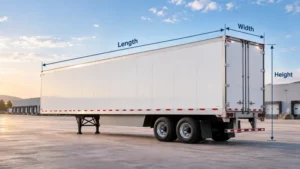
A tractor truck and a semi-trailer are two separate vehicles, but in freight transportation, they usually work as one complete combination. The tractor provides power and control, while the semi-trailer carries the cargo. A tractor can be connected to different trailers as needed.
However, choosing the right tractor and semi-trailer combination involves more than simply connecting them.The right combination depends on cargo type, load requirements, road conditions, transport distance, and vehicle configuration.This guide explains how they work together and how to choose a suitable combination for different transport applications.
What Is a Tractor Truck?
A tractor truck, also called a tractor unit , is a vehicle designed to pull a semi-trailer rather than carry cargo itself. Its fifth wheel coupling allows one tractor to connect to different trailers.
For a detailed definition and structure, see our : Tractor Truck: The Complete Encyclopedia
What Is a Semi-Trailer?
A semi-trailer is designed to carry cargo while being pulled by a tractor truck. Different designs are used for different transport needs, while landing legs support the front of the trailer when it is disconnected from the tractor.
How Does a Tractor Truck Connect to a Semi-Trailer?
 The tractor backs up so its rear goes under the front of the trailer. The trailer has a kingpin (a metal pin), and the tractor has a fifth wheel (a locking plate). When the tractor backs under the trailer, the kingpin locks into the fifth wheel. Now the trailer is attached and can follow the tractor and turn easily.
Next, connect the air hoses so the tractor can work the trailer brakes. Then plug in an electrical cable to power the trailer lights—brake lights, turn signals, and tail lights.
Finally, raise the support legs at the front of the trailer before you drive away.
Once properly connected, the tractor and semi-trailer operate as one complete vehicle combination.
Common Tractor Truck Configurations
Tractor trucks come in different axle configurations. The right choice depends on payload, road conditions, and trailer type.
4×2: Two axles, one driven rear axle. Light and fuel-efficient; best for highway freight and moderate loads.
6×2: Three axles, with one driven axle. More axle capacity with good highway efficiency; suited to regional and long-distance freight.
6×4: Three axles, two driven rear axles. Strong traction; best for heavy loads, rough roads, construction, and mining.
For a detailed comparison of 4×2, 6×2, and 6×4 configurations, see our: Tractor Truck: The Complete Encyclopedia.
Common Types of Semi-Trailers
 Different cargo requires different trailer structures.
Flatbed Semi-Trailer
A flatbed trailer has an open loading platform without fixed side walls or a roof.
It is suitable for:Steel, Pipes, Timber, Construction materials, Machinery.
Its open design makes loading from the side or above relatively easy.
Lowbed Semi-Trailer
A lowbed trailer has a low loading deck designed for tall or heavy machinery.
It is commonly used to transport:Excavators, Bulldozers, Wheel loaders, Cranes, Other construction equipment.
The lower deck helps reduce the total height of the loaded vehicle.
Container Chassis Semi-Trailer
A container chassis, sometimes called a skeletal or skeleton trailer, is designed specifically for transporting shipping containers.
Typical applications include:Port transportation, Container yards, Intermodal logistics, Long-distance container transport.
Different designs may be suitable for 20-foot, 40-foot, or other container configurations.
Dump Semi-Trailer
A dump semi-trailer uses a hydraulic lifting system to unload loose materials.
Typical cargo includes:Sand, Gravel, Coal, Ore, Soil, Construction materials.
It is commonly used in mining, quarrying, and construction projects.
Tanker Semi-Trailer
Tanker trailers are designed to transport liquid or, in some cases, powdered materials.
Depending on the tank design, they may transport:Fuel, Water, Chemicals, Cement powder, Other bulk products.
Different materials require different tank structures and safety standards.
Dry Van Semi-Trailer
A dry van semi-trailer has a fully enclosed cargo body and is widely used for general freight, packaged goods, and palletized cargo. Its enclosed structure protects cargo from rain, dust, and other external conditions.
Refrigerated Semi-Trailer
A refrigerated trailer, also known as a reefer trailer, is equipped with a temperature-control system.
It is commonly used for:Frozen food,Meat, Seafood, Dairy products, Pharmaceuticals, Other temperature-sensitive cargo.
How to Choose the Right Tractor and Semi-Trailer Combination
A simple way to choose the right combination is to start with the cargo rather than the truck.
Consider the following order:
Cargo → Cargo Weight → Road Conditions → Transport Distance → Trailer Type → Tractor Configuration
First, identify what you need to transport. Then determine its weight, dimensions, and loading requirements.
Next, consider where the vehicle will operate. Highway transportation, mountain roads, construction sites, and mining areas all require different vehicle characteristics.
After selecting the correct trailer, choose a tractor with suitable power, axle configuration, and braking capability.
This approach usually produces a more practical result than choosing a tractor first and trying to find a trailer afterward.
Frequently Asked Questions
Does the Length of the Semi-Trailer Affect the Tractor ?
Yes. The size and loaded weight of the semi-trailer can influence the tractor you need. Larger or heavier trailers may require a tractor with more suitable power, axle configuration, and weight capacity. Road conditions and local transport regulations should also be considered when choosing the tractor.
What Should Be Checked After Connecting a Semi-Trailer?
Check that the fifth wheel is properly locked around the kingpin, the air and electrical lines are correctly connected, the landing gear is fully raised, and the trailer brakes and lights are working properly. A visual inspection of the coupling should also be completed before departure.
Can I Change the Semi-Trailer Later Without Replacing the Tractor?
Often, yes. One tractor can be used with different semi-trailers for different transport tasks. Before changing trailers, make sure the new trailer is suitable for the tractor’s weight capacity, coupling system, braking system, and intended operating conditions.
Conclusion
A tractor truck and a semi-trailer should be chosen as one complete transport system rather than considered separately. Key factors include cargo type, payload, road conditions, transport distance, and vehicle configuration.
For highway freight, a lighter tractor combined with a dry van, refrigerated trailer, or container chassis can provide an efficient solution. For construction, mining, or heavy equipment transport, a 6×4 tractor combined with a dump or lowbed trailer is often more suitable.
Choosing the right combination can improve transport efficiency, safety, fuel economy, and long-term operating performance.